Categorii produse
- The Green Component
- Energy
- Battery Energy Storage Systems (BESS)
- Renewable Energy Systems
- Uninterruptible Power Supply
- Rehlko Generator Sets
- Data Centers
- Industrial Technique & Construction Machinery
- Probst paving tools and devices
- Pavers installation and handling devices
- Mounting surface preparation equipment
- Handling technology for fully automated factories
- New machinery and tools from Probst
- Handling technology for construction material factories
- Devices for cranes
- Manipulation technology for construction material factories: pipes and inspection chambers
- Paving stones cutter
- Handling technology for construction material factories: pavers and blocks
- Installation of pre-fabricated curbs and vacuum technique
- Handling technology for construction material factories: vacuum-based technology
- Pipe assembly
- equipment for transporting stone blocks / concrete elements
- Stone/concrete tiles installation devices
- Roof mounting handling equipment
- Separation elements installation devices
- Joint filling and surface cleaning equipment
- Highway dividers installation devices
- Compaction plates
- Special Offers
- Concrete vibration/finishing equipment
- Miller Welding Machines
- Concrete/asphalt cutting machines – discs
- Surface preparation equipment
- Probst paving tools and devices
- Garbage trucks
- Environment


Generators for Hospitals
Product Description
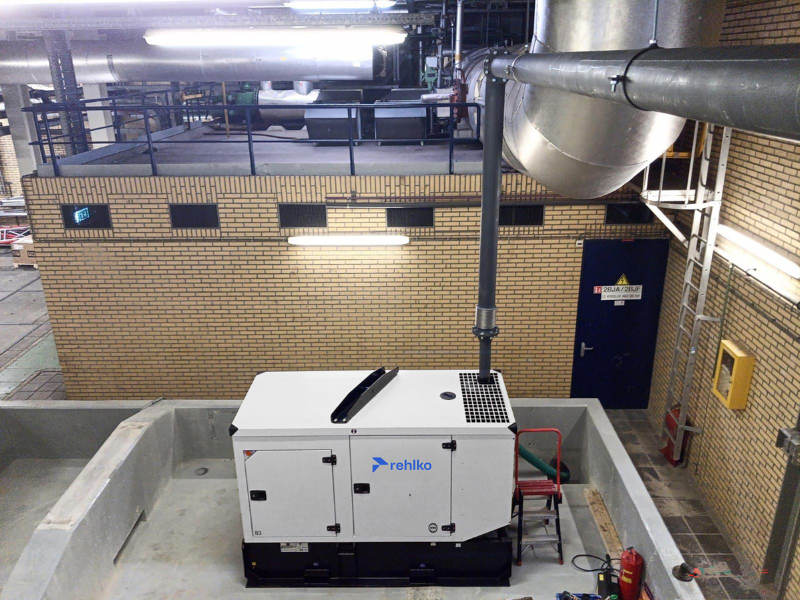
In a hospital, continuity of electrical power is directly linked to patient safety and the delivery of medical care. Operating theatres, intensive care units, laboratories and supporting systems depend on electricity to function properly. Industrial backup generators supply essential loads when utility power becomes unavailable, helping maintain medical services.
How does backup power work in a hospital?
When utility power fails, the automatic control system initiates generator starting and transfers the designated loads once electrical parameters have stabilised. The generator can support these loads for extended periods, depending on demand, fuel reserves and refuelling arrangements.
A generator does not supply power instantaneously. Equipment that cannot tolerate interruptions requires UPS systems or other dedicated power sources to bridge the starting and transfer period, according to its specific requirements. Generators and UPS systems therefore fulfil complementary roles within the emergency power system.
Which loads need backup power?
The solution is configured around the medical activities performed and the consequences of losing power to each circuit. Alongside medical equipment, the assessment must consider essential lighting, ventilation and air conditioning for critical areas, pumps, communications systems and refrigeration equipment for medical supplies.
Loads are grouped according to priority and their permissible interruption time. This analysis determines which equipment requires uninterrupted power and which can be supplied by the generator after a delay. Loads may also be connected in stages to avoid overloading the generator during transfer.
What matters when selecting a generator for a hospital?
The configuration must suit the infrastructure and requirements of each healthcare facility. Key considerations include:
- Correct sizing. The assessment considers load demand, starting currents, load changes and interaction with UPS systems or sensitive medical equipment.
- Runtime and fuel supply. Fuel reserves are determined by the required operating duration and the ability to refuel during an extended outage.
- Redundancy and maintenance access. The system architecture must account for planned maintenance and the potential unavailability of a generator.
- Location and noise levels. Ventilation, exhaust routing and acoustic treatment must account for proximity to patient rooms, air intakes and areas used by people.
- Automatic controls and monitoring. Operating status information and alarms help technical staff identify and respond promptly to potential issues.
Why are testing and maintenance essential?
A standby generator may run for only a few hours each year, yet it must be ready to start when needed. Periodic inspections, load testing and automatic transfer testing help identify problems before an actual outage occurs.
The maintenance programme includes checks on starting batteries, fuel, lubrication, cooling and automatic controls. Testing and servicing must be coordinated with the hospital’s technical staff to protect power continuity for critical loads throughout the work.
Best Tools’ experience in the healthcare sector
Best Tools Company has installed backup generators for healthcare facilities across several regions of Romania, providing solutions tailored to the requirements of each site.
As the official Rehlko distributor in Romania, Best Tools provides consultancy, configuration, delivery and commissioning. Ongoing support includes preventive maintenance contracts, periodic inspections and service interventions, delivered through its technical team and network of mobile service units, both in healthcare and across the other sectors it serves.
Contact the Best Tools team for a backup power solution tailored to your healthcare facility.