Categorii produse
- The Green Component
- Energy
- Battery Energy Storage Systems (BESS)
- Renewable Energy Systems
- Uninterruptible Power Supply
- Rehlko Generator Sets
- Data Centers
- Industrial Technique & Construction Machinery
- Surface preparation equipment
- Probst paving tools and devices
- Separation elements installation devices
- Joint filling and surface cleaning equipment
- Highway dividers installation devices
- Pavers installation and handling devices
- Mounting surface preparation equipment
- Handling technology for fully automated factories
- New machinery and tools from Probst
- Handling technology for construction material factories
- Devices for cranes
- Manipulation technology for construction material factories: pipes and inspection chambers
- Paving stones cutter
- Handling technology for construction material factories: pavers and blocks
- Installation of pre-fabricated curbs and vacuum technique
- Handling technology for construction material factories: vacuum-based technology
- Pipe assembly
- equipment for transporting stone blocks / concrete elements
- Stone/concrete tiles installation devices
- Roof mounting handling equipment
- Compaction plates
- Special Offers
- Concrete vibration/finishing equipment
- Miller Welding Machines
- Concrete/asphalt cutting machines – discs
- Garbage trucks
- Environment


Generators for Telecommunications
Product Description
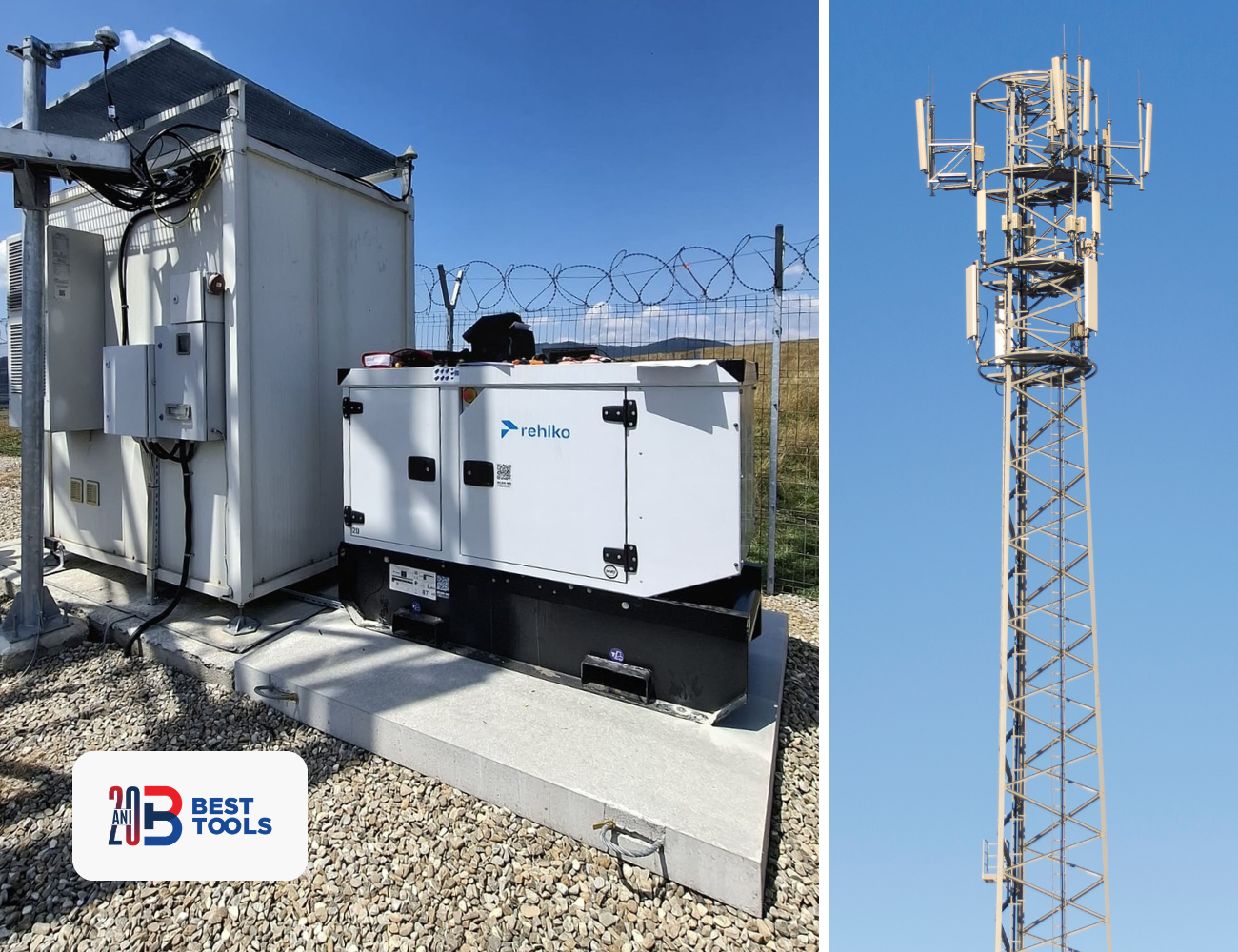
Telecommunications networks depend on electrical power to keep voice and data services available. An extended outage can affect coverage, business communications and access to essential services. Industrial generators support telecom infrastructure when utility power is unavailable, including at remote sites where access for service teams can be difficult.
Where are generators used in telecommunications?
Power solutions can serve mobile base stations, relay stations, network nodes and technical facilities. Energy requirements vary according to the installed equipment, cooling systems and availability of a grid connection.
At grid-connected sites, generators provide backup power during outages. At off-grid locations, they can operate as the main power source, with an appropriate duty rating, or as part of a hybrid solution alongside batteries and solar panels. The configuration is determined by demand, local conditions and fuel supply logistics.
How does a generator work with batteries?
Many telecom devices operate on direct current, supplied through systems incorporating rectifiers and batteries. Rectifiers convert alternating current into direct current, while batteries can maintain power to connected loads when the main source fails.
The generator supports longer periods of operation and enables battery recharging through the power supply system. Depending on the configuration, starting can be triggered by a utility outage or by the batteries’ state of charge.
Sizing must account for telecom equipment and auxiliary loads, as well as the power required to recharge the batteries. Coordinating these demands helps prevent generator overload when taking over the power supply.
What matters when selecting a generator for telecom applications?
In distributed infrastructure, generator capacity is only one selection criterion. Equally important considerations include:
- Runtime: fuel reserves must match the required operating duration and the time needed to arrange refuelling.
- Low-load operation: demand at a telecom site can vary, and oversizing can lead to prolonged operation under unfavourable load conditions.
- Environmental conditions: temperature, altitude and exposure to the elements influence equipment configuration and performance.
- Location and noise: available space, proximity to homes and service access must be assessed before installation.
- Integration with existing systems: generator controls must be coordinated with power transfer equipment, rectifiers, batteries and site monitoring.
Monitoring and maintenance for unmanned sites
Remote monitoring allows operators to track generator status, operating hours and, depending on the installed equipment, fuel levels and alarms. This information helps plan refuelling and service interventions, particularly at hard-to-reach locations.
Preventive maintenance includes checking the generator’s starting battery, fuel and cooling circuits, and testing automatic controls. Testing must also assess coordinated operation with the rest of the power system to verify that loads are supplied as intended in the system design.
Best Tools solutions for telecom infrastructure
Best Tools Company provides Rehlko industrial generators and power solutions tailored to telecommunications infrastructure, with consultancy, configuration, delivery and commissioning services.
Ongoing support includes preventive maintenance contracts, periodic inspections and service interventions, delivered through its technical team and nationwide network of mobile service units. Each solution is configured around site conditions and the operator’s continuity requirements.
Contact the Best Tools team to configure a power solution tailored to your telecom project.