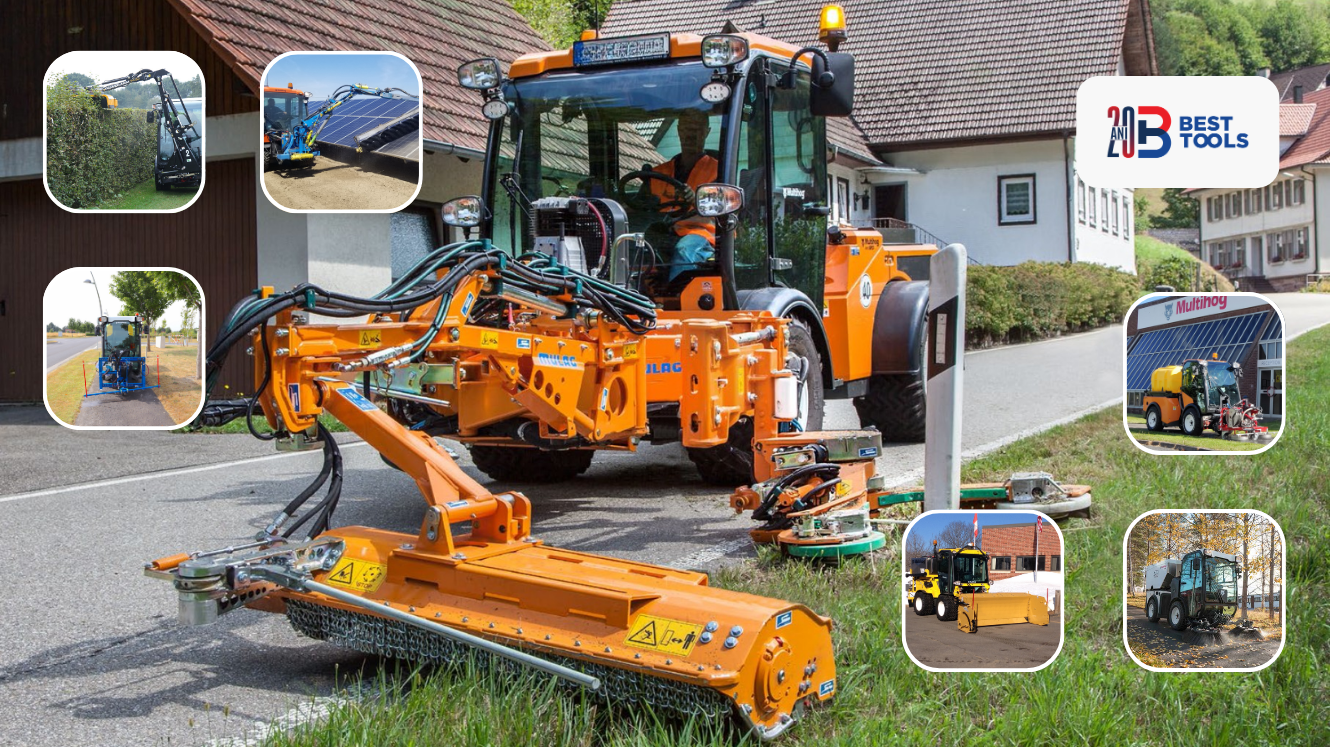
Multihog multi-functional machines are increasingly part of discussions around operational efficiency and cost optimization for local authorities and service companies. Naturally, before making an investment decision, a number of questions come up.
Below, we’ve answered some of the most common ones.
What can a Multihog machine do?
A Multihog multi-functional machine is designed as a modular platform capable of supporting a wide range of attachments, allowing it to perform multiple types of tasks.
Some of the most common applications include:
- street sweeping and cleaning
- snow clearing and de-icing
- road washing and surface cleaning
- green space maintenance (mowing, vegetation control)
- drain and gully cleaning
- leaf and debris blowing
- material handling and transport
Depending on the configuration, a Multihog machine can replace several dedicated units and be used throughout the entire year.
How long does it take to change attachments?
One of the key advantages of Multihog machines is the quick attachment change system.
In most cases, switching attachments takes just a few minutes, without the need for complex tools or additional equipment.
This allows operators to move quickly from one task to another, minimizing downtime and increasing efficiency—especially in unpredictable situations.
What costs are involved in a Multihog machine?
The cost of a Multihog machine depends on several factors:
- the selected model
- the type and number of attachments
- the technical configuration
- the intended applications
Beyond the initial investment, it’s important to consider the Total Cost of Ownership (TCO).
Compared to a fleet of dedicated machines, a Multihog solution can help:
- reduce overall equipment investment
- lower maintenance costs
- optimize resource consumption
- ensure year-round utilization
While the upfront cost may be higher than a single-purpose machine, the long-term efficiency is significantly better.
Who is a Multihog machine suitable for?
Multihog multi-functional machines are best suited for organizations that require flexibility and a wide range of operational capabilities.
They are commonly used by:
- municipalities and local authorities
- sanitation and public service companies
- infrastructure operators
- organizations managing large areas
They are especially effective for:
- small and medium-sized towns
- local communities with limited budgets
- organizations looking to reduce the number of machines in their fleet
Is a Multihog machine difficult to operate?
No. Multihog machines are designed to be user-friendly, even when used for multiple applications.
Operators can be trained quickly, and switching between different tasks does not require advanced technical skills.
This helps reduce training time and allows for easier integration into daily operations.
Can it fully replace multiple dedicated machines?
In many cases, yes.
A Multihog machine equipped with the right attachments can cover a large portion of the activities that would traditionally require multiple separate machines.
However, each case should be evaluated based on:
- workload volume
- types of activities
- frequency of use
A proper configuration is essential to maximize efficiency.
How do I choose the right configuration?
Selecting the right Multihog machine and attachments depends on the specific needs of each organization.
Key factors to consider include:
- the types of activities performed throughout the year
- seasonality
- available budget
- human resources
A proper needs assessment from the start can make the difference between a good investment and a fully optimized one.
Conclusion
Multihog multi-functional machines offer a flexible and efficient solution for organizations looking to optimize costs and simplify operations.
Understanding how they work and what advantages they bring is the first step toward making the right decision.
If you have additional questions or would like to explore which Multihog configuration best fits your needs, our team is ready to provide tailored recommendations.