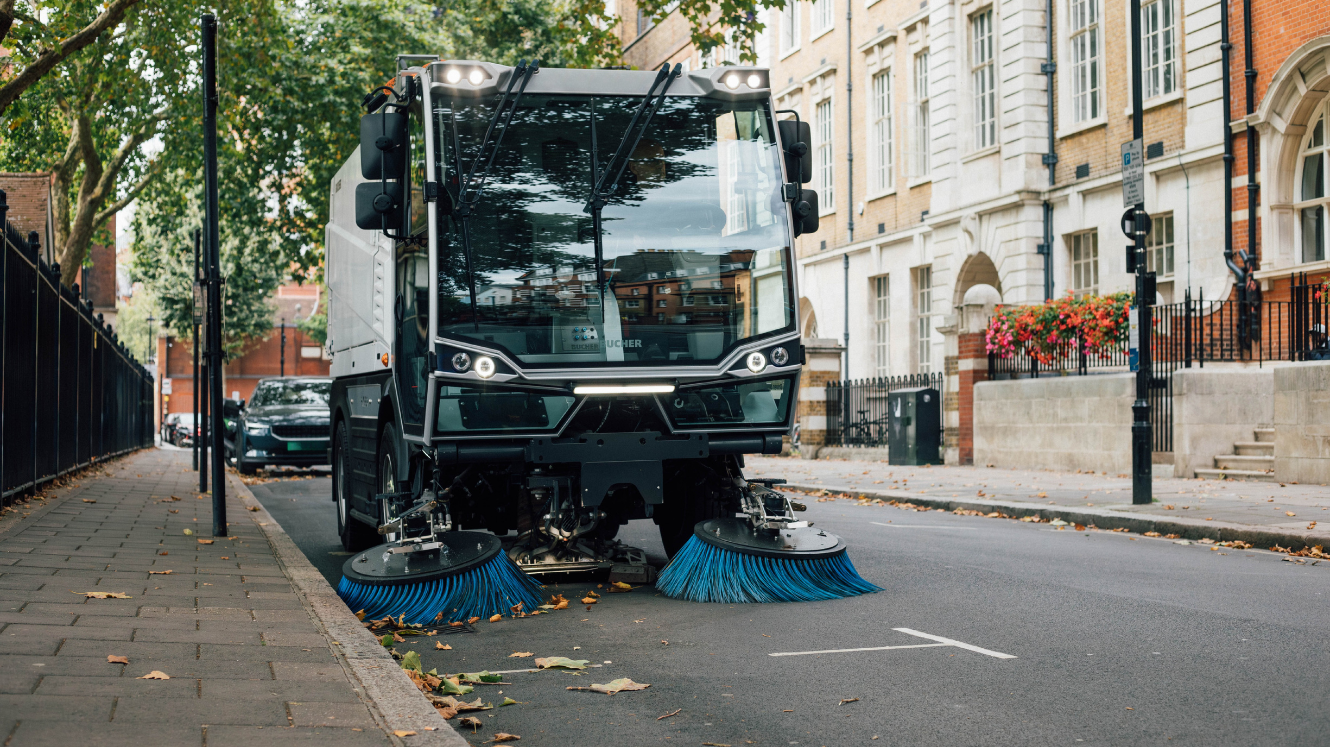
Autumn changes the pace of street cleaning operations. Fallen leaves, rainfall and deposits along kerbs call for an adapted approach, often with more frequent interventions than during the rest of the year. For local authorities and cleaning contractors, the challenge is to keep a wide variety of urban spaces clean while making efficient use of equipment, time and available resources.
In this context, mechanical sweeping contributes to urban maintenance beyond the appearance of streets. Collecting debris, controlling dust and choosing equipment with lower emissions and noise levels are all part of an approach that considers both the environment and residents’ comfort.
A season that calls for adapted operations
On tree-lined streets, leaves can accumulate again shortly after cleaning. Once wet and mixed with dust or soil, they become harder to collect. Around storm drains, accumulated material can obstruct water drainage, making these locations a particular priority.
Effective planning starts with identifying areas where debris builds up frequently and adjusting schedules to weather conditions. Main roads, residential streets, squares and pathways have different requirements. Equipment should therefore be allocated according to access, surface area and the volume of material to be collected.
Compact and truck-mounted sweepers: complementary roles
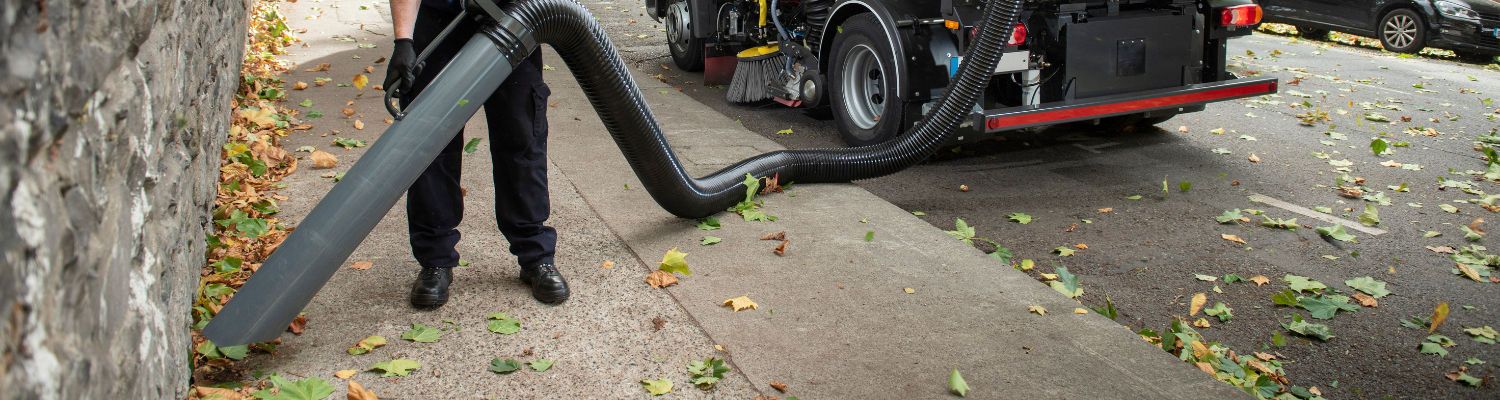
Compact sweepers are well suited to routes with limited manoeuvring space. Narrow streets, historic centres, squares and certain pedestrian areas require machines that can navigate the layout and work close to kerbs or street furniture. Access must also be assessed against the width of circulation routes and the load-bearing capacity of surfaces.
Within the Bucher Municipal portfolio, the CityCat family of compact sweepers addresses these requirements. Model selection and configuration should reflect actual routes, obstacles and the required cleaning frequency.
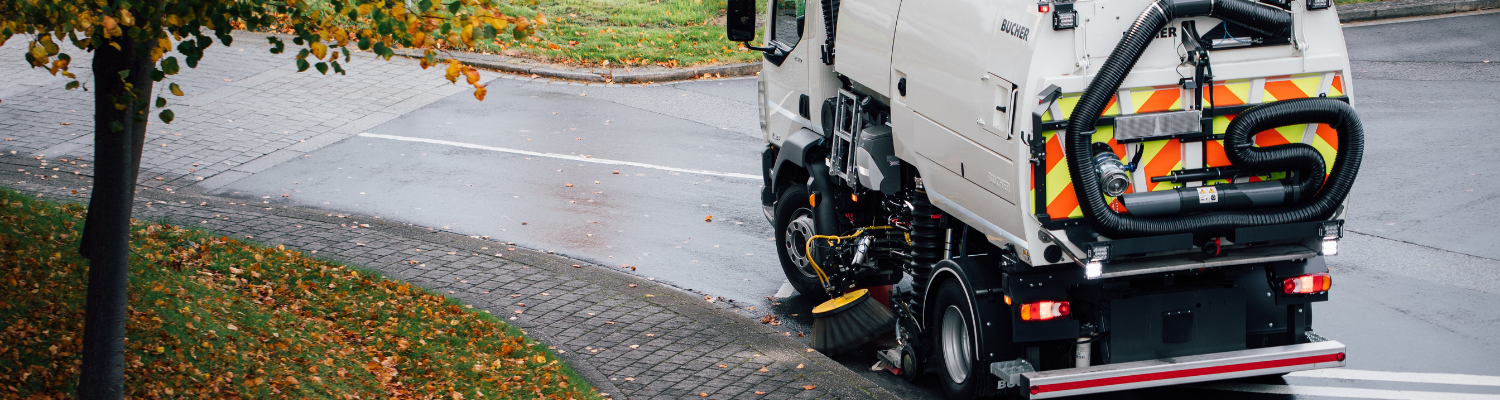
For main roads, boulevards and extensive paved areas, truck-mounted sweepers play a complementary role. Collection capacity and the ability to cover longer routes become important criteria, particularly during periods with large volumes of debris. Bucher Municipal also offers this category of equipment, designed for operating conditions that differ from those found on narrow pathways.
A properly sized fleet can combine both categories. Compact machines cover areas with restricted access, while truck-mounted sweepers handle routes that justify greater capacity. Planning should also account for trips to empty the hopper and replenish supplies, as these affect the time spent actively sweeping.
Environmental performance also depends on working practices
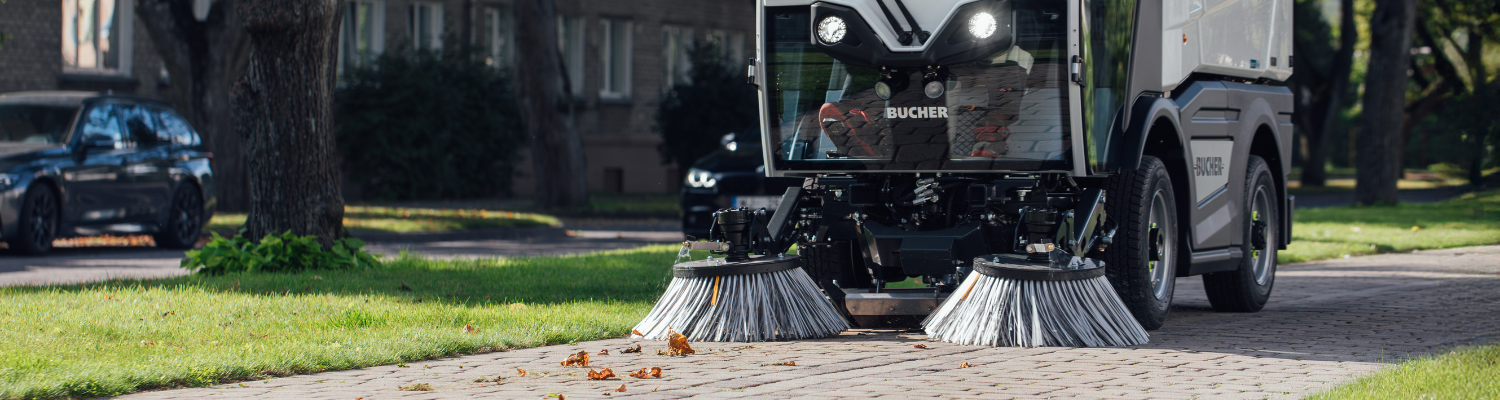
Assessing a sweeper should include how it manages dust during operation. Water spraying in the working area and a correctly functioning suction system help limit dust dispersal. Settings should be adapted to the surface and the material being collected, while water use should be considered alongside cleaning results.
Brush condition, clear suction pathways and maintenance of the water spraying systems are equally important. High-performance equipment requires regular checks and correct settings to maintain its effectiveness in daily operation.
The collected material also requires attention. Leaves swept from roads may be mixed with litter, sand and other impurities. Their subsequent handling should therefore reflect their composition and the available waste management routes, rather than automatically treating the entire collected load as suitable for composting.
Electric options for sensitive urban areas
Bucher Municipal’s electric sweepers expand the options available for urban maintenance. The absence of exhaust emissions during use and reduced propulsion noise are relevant benefits in residential neighbourhoods, city centres and areas near schools or hospitals.
Integrating these machines into a fleet requires matching their operating range to the route, workload and charging arrangements. Planning should account for cleaning time, travel distances and available breaks. This allows electric equipment to meet a practical operational need while supporting local objectives for reducing emissions and noise.
Equipment and organisation need to work together
During periods of heavy leaf accumulation, mechanical sweeping should be coordinated with crews collecting leaves from areas that machines cannot reach. Operator training and preventive maintenance also help maintain a consistent cleaning schedule.
For Best Tools Company, addressing these requirements means matching Bucher Municipal solutions to each city’s specific conditions, from equipment configuration to operational support. Autumn street cleaning thus becomes a matter of effective organisation: the right machine, on the right route, at the time when cleaning is needed.